At the opening of “Divine Egypt” Max Hollein, CEO of the MET, said “Egyptian relics are so fascinating every ten years the Museum organizes a special exhibit to share artifacts of the ancient civilization. Such monumental efforts add perspective to our understanding of the universality of humanity’s cultural bonds.
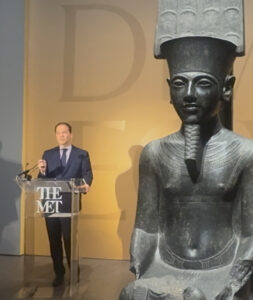
Max Hollein, welcomes all to visit “Divine Egypt” October 2025
This year, “Divine Egypt” is a landmark event at the MET. 70 spectacular treasures loaned from museums around the world stand with 140 antiquities culled from the MET’s permanent collection. Together this once in a lifetime installation explains some of the allegorical meanings behind elaborate hieroglyphics.
Literal translations of “divine” messaging reveals Egyptians longed to make sense of life’s mysteries; fertility, power and death. Artisans used priceless materials to craft memorials to honor deities. For Pharaohs and everyday people alike gods were keepers of the fates.
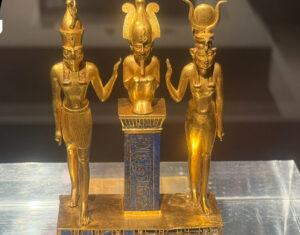
Gold and Lapis; Osiris, Isis, and Horus fundamental figures of Egyptian life. On loan from the Louvre, Paris
Diana Craig Patch, Curator in Charge of the Department of Egyptian Art at the MET said “gods could take multiple forms. They all had a role to play when tackling life’s challenges. Ancient Egyptians worried about the same things we do.”
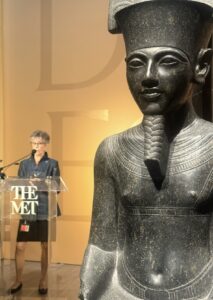
Diana Craig Patch October, 2025
Many of the artifacts in this presentation are classically beautiful. However, by today’s standards, some seem erotic.
The intention of such graphic commissions was to communicate an appreciation for the essential ‘stuff of life’. The images assured the masses that they were part of a divine plan, symbolically conveying a connection between the heavens and routines of living.
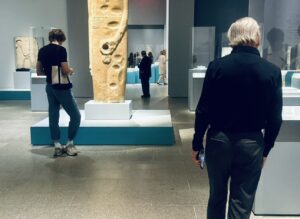
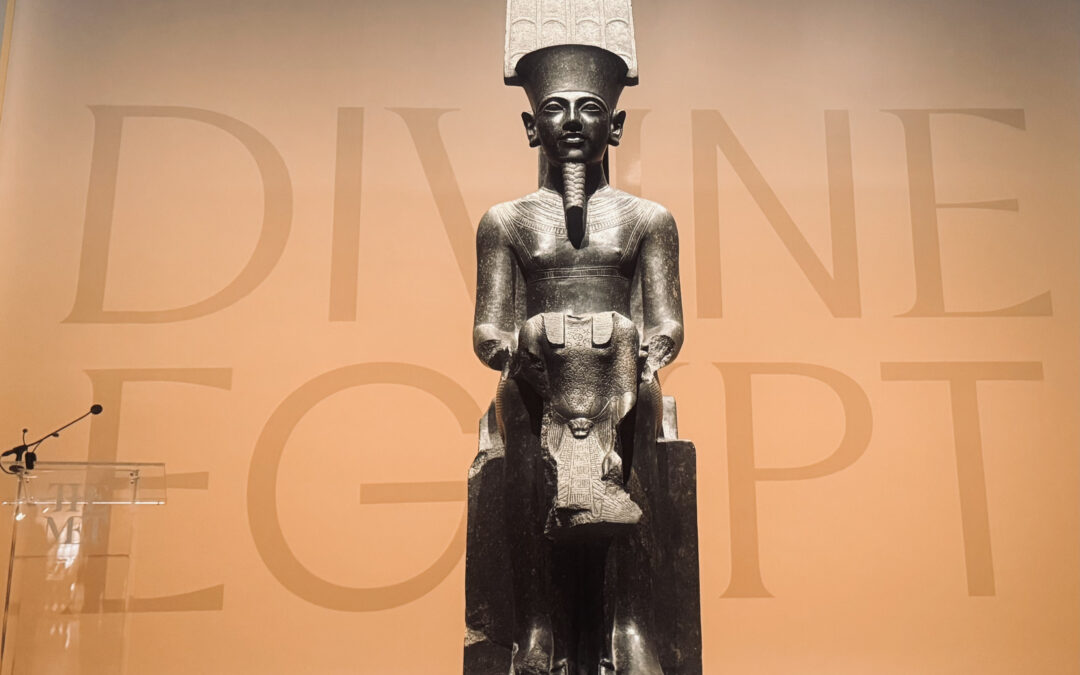
Unlike other deities, iconography of the god MIN was consistent thought Egypt.
This statue of Min was included in agricultural festivals. With an erect phallus (lost) Min was associated with male and agricultural fertility. Often a centerpiece of Temple precessions, it was common for ancient Egyptians to grind Min’s surface to collect dust for use in personal rituals. Rather than a symbol of eroticism this massive display and others were prayerful petitions for successful communal reproduction.
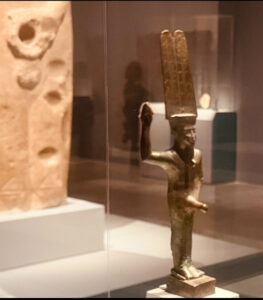
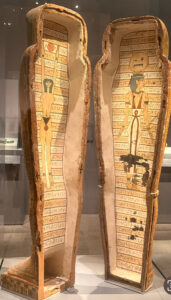
The sky goddess NUT, (sounds like newt) symbolizes giving birth to the sun each morning and swallow it each night.
Covered in symbols this coffin represented goddess Nut’s maternal and eternal role as a creator of life. As one of the oldest deities in Egyptian mythology, her power is often represented by a nude woman, under a star covered sky, symbolic of her primary role in creating and sustaining a lifecycle.
A first impression of this mummy’s coffin appears to show a woman destined to spend eternity with menstrual cramps. But, decoding the parlance of Egyptian lore Nut is protecting the soul. Ritualistically, she swallows the sun every morning and releases it every night protecting the universe from chaos and delivering a predictable ebb and flow here and in the here after.

“Divine Egypt” isn’t porn, it’s perspective! Catch it now ~January 19th, 2026
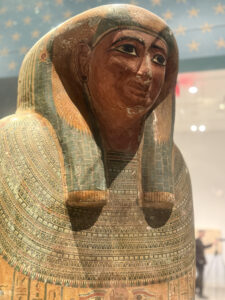
An virtual tour of ” Divine Egypt” is available on YOU TUBE /Met exhibitions
Discover more from She The People News explores the world of business, culture and politics from a woman’s point of view.
Subscribe to get the latest posts sent to your email.