
Wander The Frick !
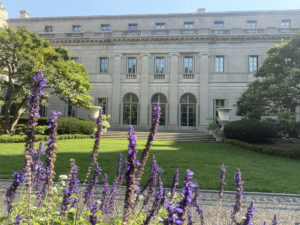
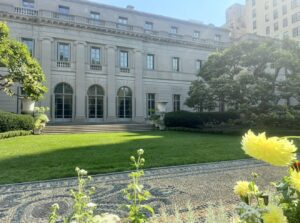
Industrialist Henry Clay Frick’s Manhattan manse opened to the public in 1935. His home, featuring more than 1,800 works of Fine Art has been designated a National Landmark.
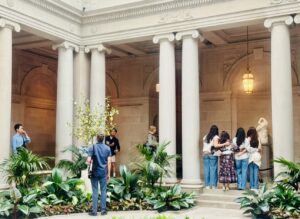
Last year the celebrated architect Annabelle Selldorf refreshed Frick’s Grande-Dame with a $300,000 facelift. Polished to perfection the multi-faceted gem is a welcoming space of timeless grace.
Selldorf’s understanding of history embraced Frick’s intention to contribute a sense of understated refinement to society in perpetuity. Stylistically, the Museum speaks in every language. Frick’s collection has the power to integrate cultures. It’s also an oasis for philosophical refection.
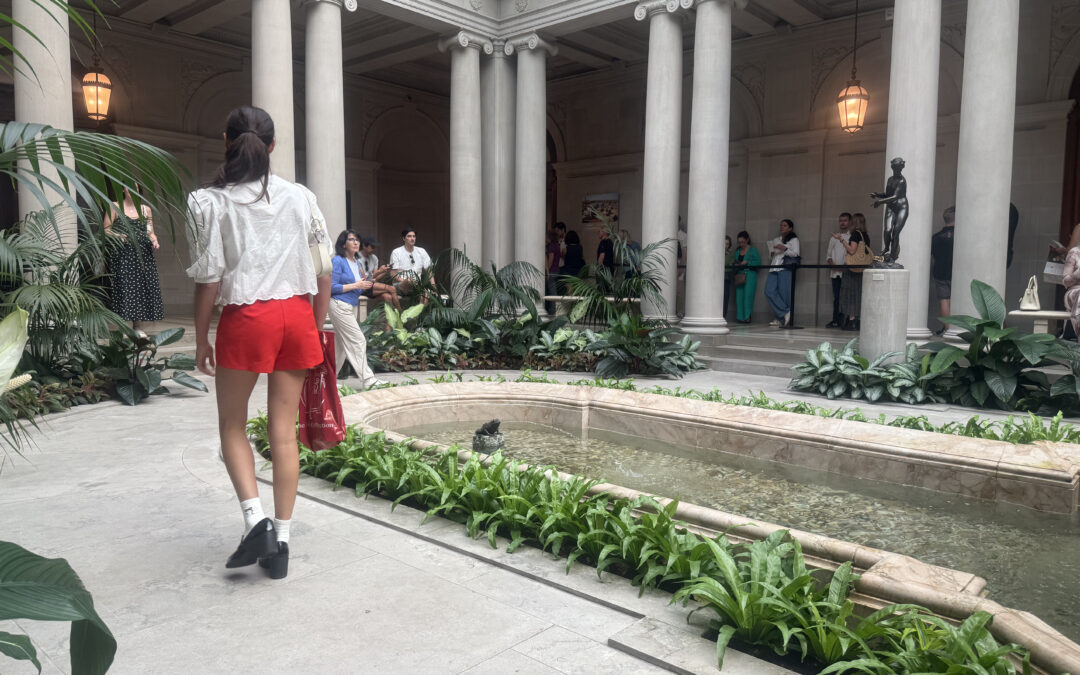
Flooded with light the atrium of 1 East 71st Street is framed with tropical foliage. Populated by scholars, art aficionados and devotees of gentility the museum is a sanctuary of civility.

Beyond the garden-scape, galleries of ordinary and extraordinary proportions frame Frick’s ambition to share classical art and it’s greater meanings. Old Masters; Bellini, Rembrandt and Vermeer mingle as old friends encouraging curious conversations.
Now – May 25th ” Gainsborough:The Fashion of Portraiture” also contributes to the visual conversation. It’s a special exhibit featuring more than two dozen pieces painted by Thomas Gainsborough. In context, the British artist was as influential in articulating 18th Century discourse as American publisher Anna Wintour was to followers of 20th century Vogue magazine.
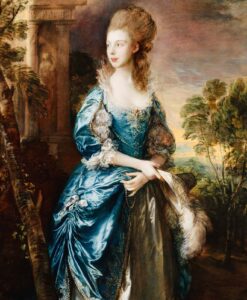
Thomas Gainsborough (1727-1788) The Hon. Frances Duncombe (ca.1776-77)
Organized by scholars from the Frick Research Library, conservators from The Metropolitan Museum of Art, the J. Paul Getty Museum and the Yale Center for British Art “Gainsborough: The Fashion of Portraiture” offers luscious commentary on class, taste and societal norms that remains relevant today.

Thomas Gainsborough (1727-1788), Mary, Countess Howe,1763-64. Kenwood House
Known primarily as a painter of landscapes Gainsborough’s financial needs lead him to more lucrative work as a reluctant portraitist. Flattering interpretations of glitterati established him as a tastemaker. He was a trendsetter. Soft colors, moody settings and aspirational poses transformed blank canvases into conversations of psychological expansiveness.
Thomas Gainsborough’s masterpieces were manipulated to capture and shape social aspirations. They represented culture at it’s finest, society at it’s best. His images were a collection of Fine Arts intended to idealize and elevate communal values.
Henry Clay Frick’s home is atmospherically intimate. But there’s more to explore than the architecture and arts favored by the Gilded tastemaker, trendsetter. His Museum is a sanctuary to revisit Frick’s greater philosophical gift. Alone or with friends we’re encouraged to question what we’re contributing to the Common-Wealth of humanity.
The spirit of Frick invites visitors to wander the Museum’s elegant atrium, stroll the meditative galleries and Watch The Fashions then wonder WTF our choices say about today’s culture.

Frick Entrance: 1 East 70th Street NYC
Open Monday, Wednesday, Thursday, Friday , Saturday, Sunday 10:30-5:30 ( info@frick.org)
Discover more from She The People News explores the world of business, culture and politics from a woman’s point of view.
Subscribe to get the latest posts sent to your email.